
Primary education is the most critical phase in a child’s academic journey. It is during these formative years that children develop not only literacy and numeracy skills, but also curiosity, discipline, values, and a love for learning. At Scholars Paradise International School, we believe that a strong, well-structured primary education curriculum is the foundation for lifelong success.
This detailed guide explains the primary education curriculum in India, with a special focus on the ICSE primary curriculum followed at Scholars Paradise. Parents searching for clarity on what is taught in primary school, subjects in primary classes, and how the curriculum progresses from Class 1 to Class 8 will find this guide especially helpful.
What Is the Primary Education Curriculum?
The primary education curriculum refers to the structured academic framework followed from Classes 1 to 8, usually for children aged 6 to 14 years. This curriculum defines:
- Subjects taught at each level
- Learning objectives and outcomes
- Teaching methods and assessments
- Skill development across academic and co-curricular areas
In India, primary education is divided into two stages:
- Lower Primary: Classes 1 to 5
- Upper Primary: Classes 6 to 8
Together, these years focus on building a child’s academic foundation, thinking skills, social behavior, and moral values.
Primary Education Curriculum in India (NEP 2020 Overview)
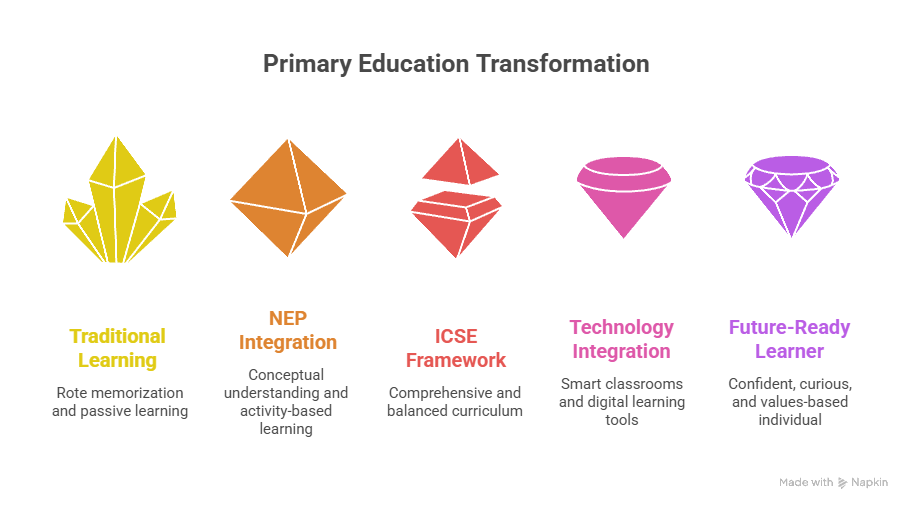
Under the National Education Policy (NEP) 2020, primary education has been reimagined to emphasize:
- Conceptual understanding over rote learning
- Experiential and activity-based learning
- Multidisciplinary exposure
- Language proficiency and numeracy
- Life skills, values, and emotional development
The NEP introduces a 5+3+3+4 structure, where:
- Foundational Stage: Preschool to Class 2
- Preparatory Stage: Classes 3 to 5
- Middle Stage: Classes 6 to 8
At Scholars Paradise International School, our primary education curriculum aligns with NEP principles while following the ICSE framework, ensuring academic rigor along with holistic development.
Why Choose the ICSE Primary Curriculum?
The ICSE (Indian Certificate of Secondary Education) curriculum is widely regarded as one of the most comprehensive and balanced education systems in India.
Key Advantages of the ICSE Primary Curriculum
- Strong focus on English language proficiency
- In-depth understanding of subjects rather than memorization
- Balanced emphasis on science, mathematics, humanities, and arts
- Encourages analytical thinking, creativity, and application-based learning
- Smooth transition to competitive exams and higher education
At Scholars Paradise, the ICSE primary curriculum is delivered through smart classes, interactive teaching methods, and continuous assessment to ensure every child learns effectively.
Subjects Taught in Primary Education (Classes 1–8)
The primary school curriculum includes a carefully designed set of subjects that support intellectual, emotional, physical, and moral growth.
Core Subjects in Primary Education
- English
- Mathematics
- Environmental Studies (EVS)
- Science (Upper Primary)
- Social Studies (Upper Primary)
- Hindi / Urdu / Regional Language
- Computer Studies
- Value Education
- Physical Education
- Art, Craft, Music, and Creative Activities
Each subject is taught with age-appropriate objectives and progressive depth.
English Curriculum in Primary Classes
English is a cornerstone of the ICSE primary education curriculum.
Focus Areas in English
- Reading skills and comprehension
- Vocabulary development
- Grammar and sentence structure
- Creative writing and expression
- Listening and speaking skills
Class-wise Progression
- Classes 1–2: Phonics, basic reading, simple sentences
- Classes 3–5: Paragraph writing, grammar concepts, comprehension
- Classes 6–8: Essays, literature, advanced grammar, critical reading
Strong English foundations help students excel academically and communicate confidently.
Mathematics Curriculum in Primary Education
Mathematics in primary school builds logical thinking, problem-solving ability, and numerical confidence.
Key Areas Covered
- Number systems and operations
- Fractions and decimals
- Geometry and measurements
- Data handling
- Algebra basics (upper primary)
Learning Approach
- Concept-based teaching
- Use of visual aids and manipulatives
- Real-life problem-solving activities
- Continuous practice with understanding
This approach ensures students do not fear mathematics but enjoy learning it.
Environmental Studies (EVS) – Classes 1 to 5
EVS introduces young learners to the world around them.
Topics Include
- Family and community
- Plants and animals
- Food, water, and shelter
- Health, hygiene, and safety
- Environment and sustainability
EVS encourages observation, curiosity, and awareness from an early age.
Science Curriculum – Upper Primary (Classes 6 to 8)
From Class 6 onwards, Science becomes a separate subject.
Science Subjects Covered
- Physics: Motion, energy, light, electricity
- Chemistry: Materials, changes, basic reactions
- Biology: Living organisms, plants, human body
Teaching Methodology
- Experiments and practical demonstrations
- Conceptual clarity through activities
- Encouraging scientific thinking and inquiry
This builds a strong foundation for secondary-level science education.
Social Studies Curriculum – Classes 6 to 8
Social Studies helps students understand society, history, and geography.
Components of Social Studies
- History: Ancient, medieval, and modern history
- Geography: Earth, climate, resources, maps
- Civics: Government, citizenship, rights, and duties
Students develop awareness, critical thinking, and social responsibility.
Language Curriculum (Hindi / Urdu / Regional Languages)
Language learning strengthens cultural identity and communication skills.
Objectives
- Reading and writing fluency
- Grammar and vocabulary
- Cultural appreciation through literature
At Scholars Paradise, students are encouraged to value multilingual learning alongside English proficiency.
Computer Education in Primary Curriculum
In today’s digital-first learning environment, technology plays a crucial role in strengthening the primary education curriculum. At Scholars Paradise International School, digital learning is further enhanced through structured smart classroom support and teacher-enabled learning systems.
As part of this approach, we align our teaching practices with modern school transformation and learning platforms such as LEAD School . LEAD School focuses on improving classroom delivery, curriculum planning, and teacher effectiveness using technology-driven tools. This alignment ensures:
- Better lesson planning and structured learning outcomes
- Consistent academic delivery across classes
- Improved student engagement through digital content
- Continuous teacher training and academic monitoring
By integrating such advanced educational ecosystems with our ICSE-based curriculum, Scholars Paradise ensures that students receive future-ready primary education without compromising on conceptual clarity or values-based learning.
Technology is an integral part of modern education.
Computer Curriculum Focus
- Basic computer awareness (lower primary)
- MS Office tools and digital skills
- Introduction to coding concepts (upper primary)
- Safe and responsible internet usage
Our smart classes integrate technology seamlessly into daily learning.
Value Education and Moral Development
Academic excellence is incomplete without strong values.
Value Education Focus Areas
- Respect, honesty, and discipline
- Social responsibility
- Emotional intelligence
- Character building and ethics
Scholars Paradise integrates value-based education into daily school life to nurture responsible individuals.
Physical Education and Sports
Physical development is essential for overall growth.
Activities Include
- Indoor and outdoor games
- Yoga and physical exercises
- Team sports for collaboration
- Health and fitness awareness
Regular physical activity improves concentration and well-being.
Arts, Music, and Creative Development
Creative subjects help children express themselves and discover talents.
Creative Areas
- Drawing and painting
- Craft and design
- Music and rhythm
- Dance and performance activities
These activities enhance confidence, imagination, and emotional balance.
Class-Wise Curriculum Progression (Classes 1–8)
Classes 1–2: Foundational Stage
- Literacy and numeracy basics
- Play-based and experiential learning
- Focus on habits, discipline, and curiosity
Classes 3–5: Preparatory Stage
- Strong academic foundation
- Subject awareness deepens
- Independent reading and writing
Classes 6–8: Middle Stage (Upper Primary)
- Subject-specific teaching
- Analytical and logical thinking
- Preparation for secondary education
Assessment and Evaluation in Primary Education
Assessment at Scholars Paradise is continuous and child-friendly.
Evaluation Methods
- Worksheets and class activities
- Periodic tests and exams
- Projects and presentations
- Observation-based assessments
The focus is on improvement, understanding, and confidence rather than pressure.
How Scholars Paradise Implements the Primary Curriculum
What sets Scholars Paradise apart is how the curriculum is delivered.
Our Unique Approach
- ICSE-aligned structured curriculum
- Smart classrooms with digital learning tools
- Activity-based and experiential teaching
- Individual attention and small class sizes
- Strong teacher-student engagement
- Safe, nurturing, and disciplined environment
With multiple branches across Lucknow, we provide accessible, high-quality primary education to families citywide.
Benefits of a Strong Primary Education Curriculum
- Builds lifelong learning habits
- Develops academic confidence
- Encourages curiosity and creativity
- Strengthens moral and social values
- Prepares students for secondary education
A well-designed curriculum ensures children grow into capable, confident learners.
Frequently Asked Questions (FAQs)
What is primary education?
What does primary level education mean?
Which classes are included in primary education?
What is the meaning of primary education in India?
When does primary school start in India?
What are lower primary classes?
What does lower primary mean?
What are upper primary classes?
Upper primary classes start from which class?
Is Class 6 primary or secondary?
Is Class 7 primary or secondary?
Is Class 8 primary or secondary?
What is the structure of primary education?
Lower Primary: Classes 1–3
Upper Primary: Classes 6–8 Together, these stages form the foundation for secondary education
Primary education includes which classes?
What is the difference between lower primary and upper primary?
Primary education means 10th or 12th?
What comes before primary education?
What comes after primary education?
How many years is primary education in India?
What is primary school level of education?
What is meant by upper primary education?
What is taught in primary school?
What curriculum is best for primary education?
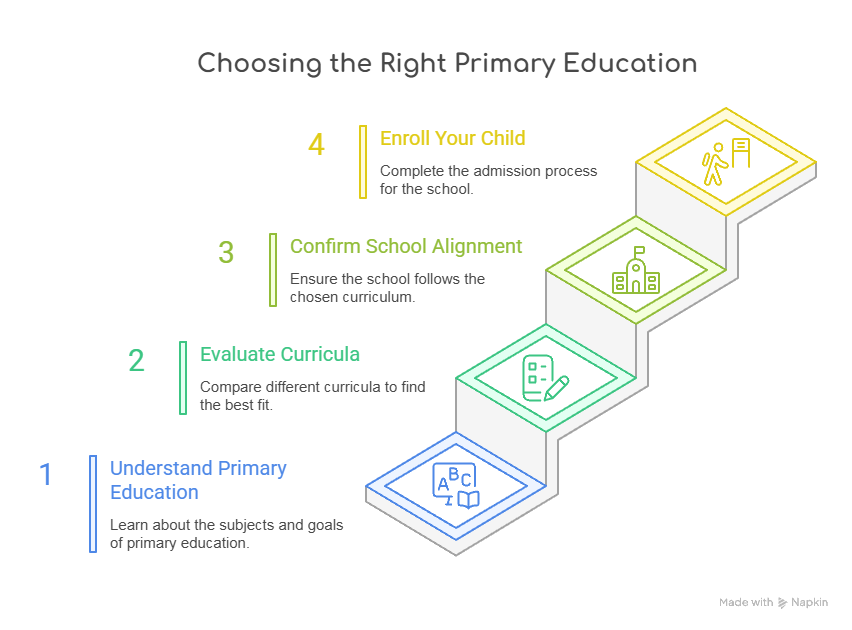
Enroll Your Child in a Strong Primary Education Program
Choosing the right primary education curriculum is one of the most important decisions for your child’s future. At Scholars Paradise International School, we combine academic excellence, modern teaching, and value-based education to give children the best possible start.
Admissions for Primary Classes (2025–26) are now open.
Explore our Primary Education Admission Program
Request a Brochure or Apply Now
Give your child a strong foundation with Scholars Paradise International School.